Information
Okaukuejo, located 17 km from the southern entrance of the park, was the first tourist camp to open in Etosha. The camp can be reached by driving north from Outjo on the C38. This road leads to Etosha National Park’s Andersson Gate – and from here it is only a few ‘game viewing’ kilometers to Okaukuejo.
Okaukuejo first opened as a tourist rest camp in 1955. It’s original spelling, Okakwiju, meant “the woman who as a child every year”, or a prolific woman.
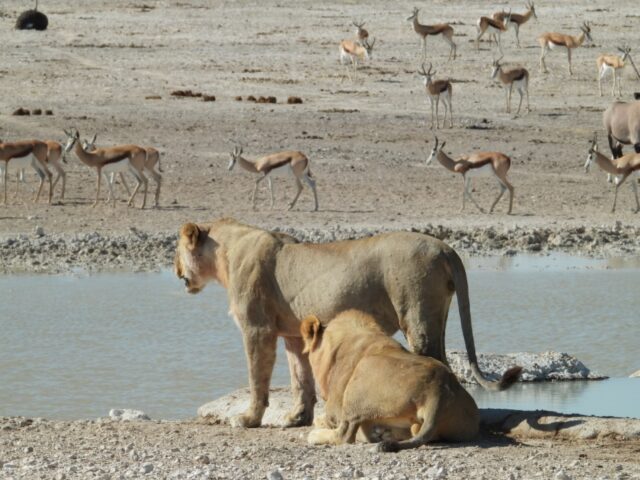
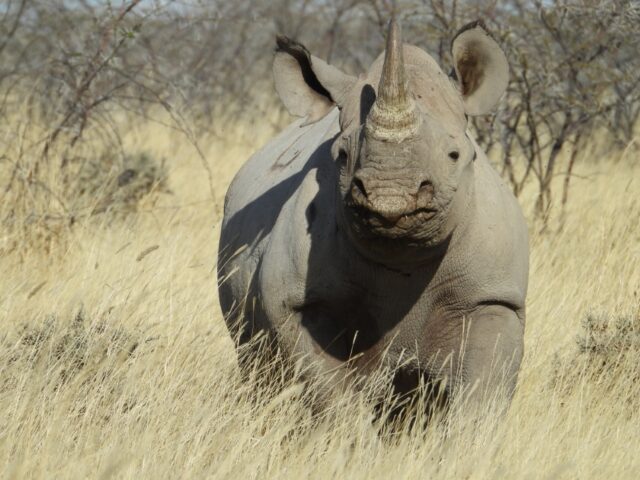
The main attraction of the Okaukuejo Camp is the central floodlit waterhole. Here you can watch animals of all shapes and sizes coming to quench their thirst – starting from daybreak until nighttime. You will in all probability see elephant, lion and rhino drinking at the same time!
Rooms
Accommodation is provided to suit every need, in premier double-storey waterhole chalets with balconies overlooking the waterhole; waterhole bush chalet double rooms, bush chalets, family chalets and double rooms.
Categories Accommodation is in one of the following units: • Premier Waterhole Chalet: double story chalet with a balcony overlooking the waterhole. Two bedrooms,downstairs with 2 single beds and upstairs with a queen size double. Lounge area, fridge and tea-station • Family Chalet: self-catering unit with two bedrooms, kitchenette and braai (barbeque) area • Waterhole Chalet: situated close to the waterhole these are comfortable double rooms with en-suite bathroom, fridge & tea-station • Bush Chalet: 2 bed chalet with one bedroom, bathroom, lounge area & braai. Equipped with fridge & tea station • Double Room: room with en-suite bathroom, fridge & tea station • Camping The central part of the Camp houses the restaurant, bar, curio shop, pool and tourist shop where you can buy basic necessities.
Facilities
Guest Services • Swimming pool • Restaurant, Bar and Kiosk • Tourist Shop and Post Office • housekeeping attention with evening turn-down service • Laundry service upon request • Free Parking • Filling Station
In 1907, the German Governor, Dr Friedrich von Lindequist, proclaimed the region south, north and west of the Etosha Pan as a game reserve on 22 March 1907. This area was referred to as Game Reserve No 2 and encompassed the Etosha Pan and the Kaokoveld from the Kunene River in the north to the Hoarusib River in the south – a total area of about 90 000 km². The size of the park has been reduced considerably since it was first proclaimed in 1907, but it still remains larger than several European countries.
Today the Etosha National Park has a size 22 912 km², making it one of the largest national parks in Africa, with the Etosha Pan, covering 4 730 km², 21% of the park area.
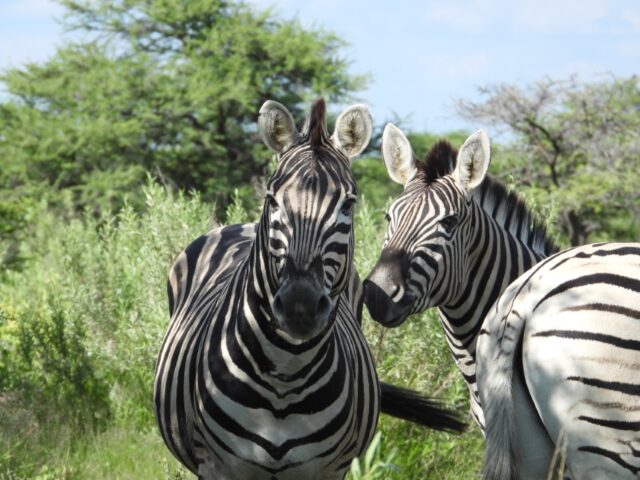
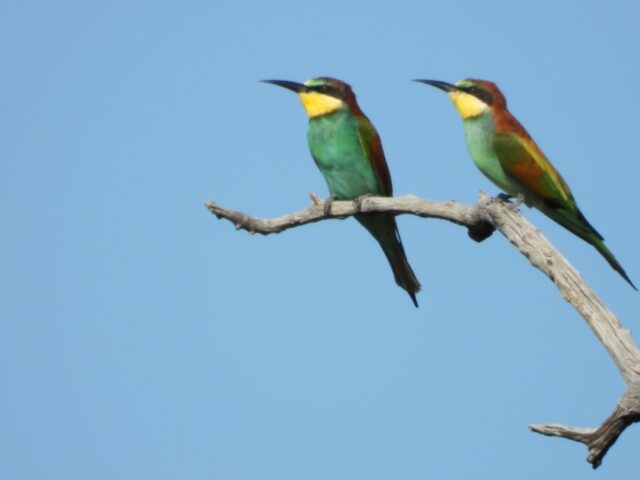
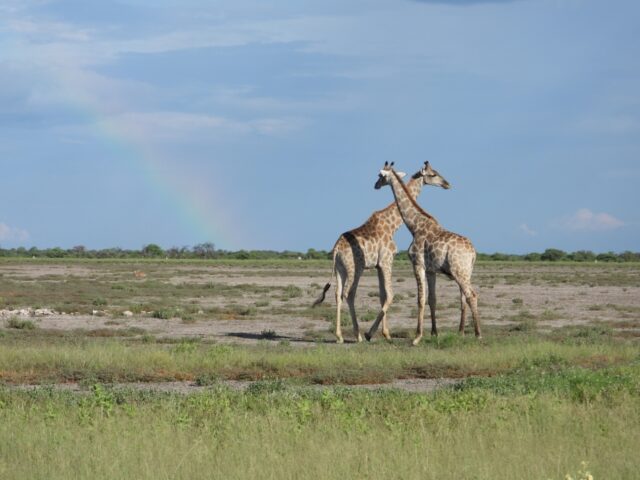
The Etosha National Park is home to over 100 mammal species, 340 bird species and 110 reptile species. Larger mammals include lion, elephant, leopard, giraffe, cheetah, hyena, springbok, zebra and eland. Animals, particularly during the dry season, are dependent on the many waterholes found in the park, and these serve as great places for game viewing. Vegetation is varied, but consists mostly of mopane woodland and grassy plains.
The park is dominated by a large, white depression (the Etosha Pan), which used to be a lake. It is now a dry, dusty, clay and salt pan, which occasionally fills with water after heavy rain. This temporary water attracts thousands of wading birds, including flamingos. Springs along the edge of the Etosha Pan also draw large concentrations of wildlife and birds.
Activities